
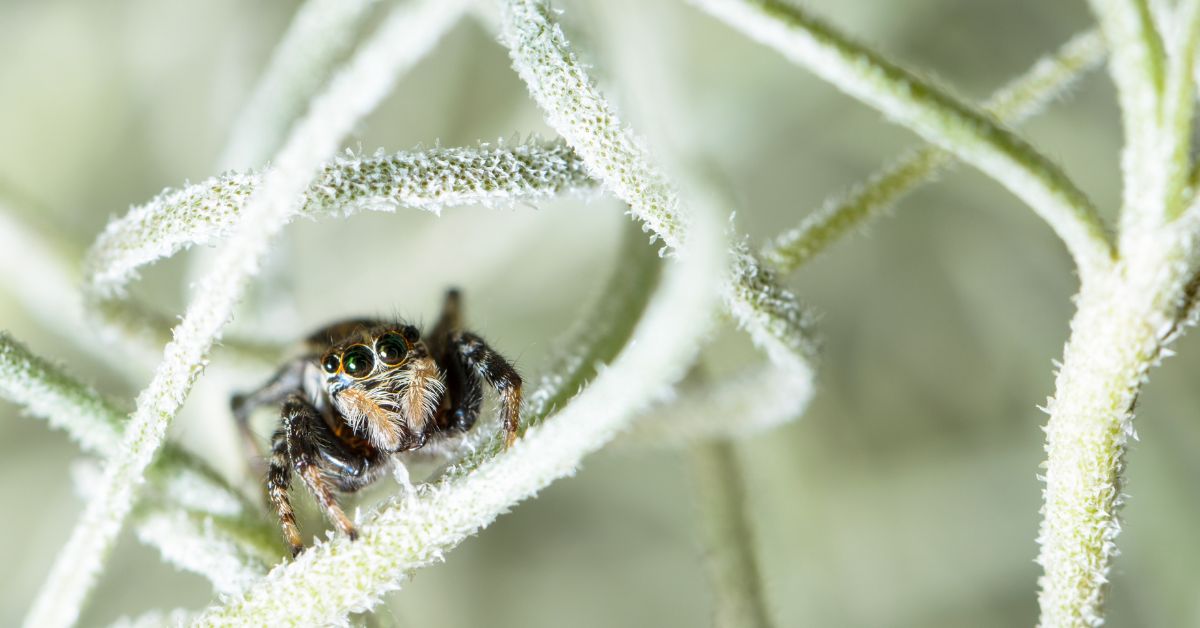
Most spiders in Missouri do not simply die off when winter hits; many slow down, shelter, or even produce their own version of “antifreeze” to ride out the cold until spring. A brief warm spell in February—like the one after our first real week of snow—can wake some of these spiders back up and bring them into closer contact with people and homes.
Do Spiders Hibernate?
Some Missouri spiders do enter a hibernation‑like state, finding sheltered spots under bark, rocks, leaf litter, or in cellars, attics, and other protected areas. They become sluggish and may stop feeding, but they are not truly gone—many simply wait for conditions to improve. Others, including brown recluses in homes, may remain active through winter if they have shelter and food.
That’s why you can still find live spiders when opening boxes in an attic or basement, even in the coldest months.
Do Spiders Die in the Winter?
Some spiders do die off by the end of the warm season, leaving behind egg sacs or spiderlings that overwinter and start the next generation in spring. However, many species survive for one to three years and are built to handle Missouri winters.
Key survival strategies include:
- Producing glycol compounds in their body fluids that act like natural antifreeze, helping their tissues avoid freezing damage.
- Moving into protected micro‑habitats—under bark, stones, siding, or inside structures—to escape the harshest cold.
So while cold and snow reduce outdoor spider activity, they do not wipe spiders out the way many people assume.
How Spiders Survive a Missouri Winter (and February Warm-Ups)
In and around Missouri homes, common species like house spiders, cellar spiders, and brown recluses survive by staying in dry, undisturbed spaces such as basements, crawl spaces, attics, and storage areas. When a warm spell hits in February:
- Spiders sheltering indoors may become more active and visible along walls, ceilings, or near windows, hunting other insects that also “wake up.”
- Outdoor spiders with natural antifreeze can move within protected zones (under siding, inside garages, behind foundation shrubs) and sometimes wander indoors through gaps.
Brown recluses, in particular, are well adapted to living inside Missouri homes year‑round and may be found in closets, behind baseboards, and in seldom‑used boxes regardless of outside temperature.
Actionable Steps During a February Warm Spell
Use this first real warm‑up to reduce spiders now, before spring:
- Declutter and inspect storage areas:
- Reduce food sources:
- Seal entry points:
- Use caution in known spider zones:
- Wear gloves when working in woodpiles, storage areas, or crawl spaces.
- Shake out shoes, coats, and boxes that have sat undisturbed.
These simple steps cut down on both harmless house spiders and medically important species like brown recluses and black widows.
When to Call Bug-A-Way
Because spiders walk on their “tiptoes” and don’t pick up much pesticide from treated surfaces, DIY sprays alone rarely solve a serious spider problem. If you’re seeing frequent spiders indoors, especially suspected brown recluses or black widows, professional help is the safest approach.
Bug-A-Way can:
- Inspect and help confirm the types of spiders present in your Missouri home.
- Target key hiding spots and entry points with methods designed for spider behavior.
- Recommend practical changes (storage, sealing, lighting, and insect control) to make your home far less attractive to spiders long term.
A week of snow doesn’t erase spider issues, and a February warm spell can bring them back into view. If you’re worried about spiders this winter, contact Bug-A-Way for a thorough inspection and a customized spider control plan.